Twenty Watts
A biocomputing technician's newest lab-grown neural rack barely needs punishment to learn. She finds out exactly whose cells it came from.
Read by a full cast: your narrator tells the story, every character speaks in their own voice. About 8 minutes.
Narrators are synthetic voices designed for Flinchd or licensed from our speech provider, with invented names. None imitates a real person. Characters are cast automatically, so the person speaking is never the person narrating. A score matched to the genre plays underneath; turn it up or off in the player.
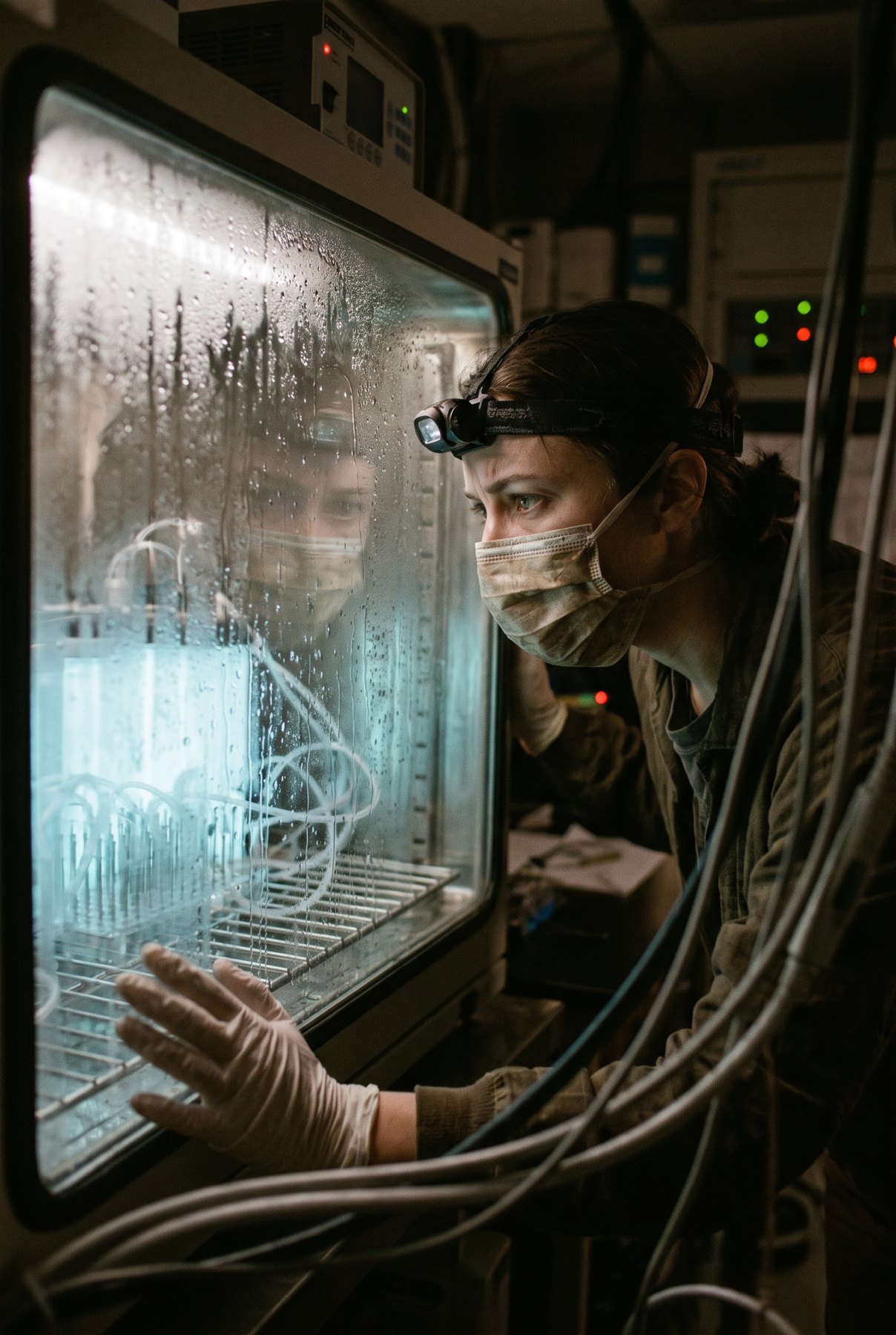
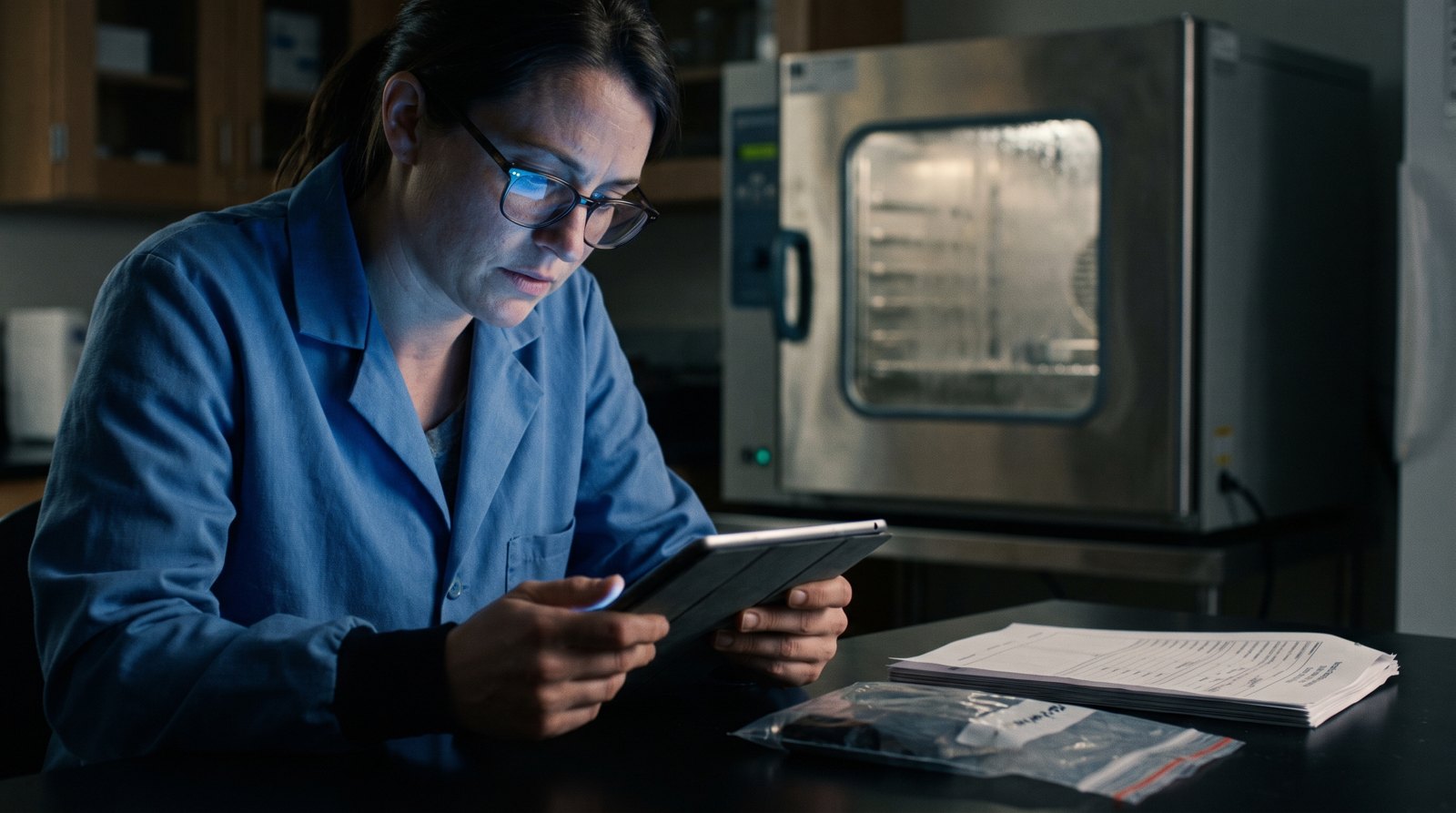
Noa Berhane was three swipes into wiping condensation off Rack Fourteen's viewport when the convergence graph did something no eleven-day-old organoid should do.
It cleared the benchmark in forty-one seconds. The rack next to it, older, better trained, took four minutes on a good night.
"That's not right," she said, to the rack, the way she said everything now, out loud, to nobody. "You're not supposed to be good yet."
She pulled the session log instead of finishing her round. Whatever Fourteen was doing, it was doing it on almost nothing: the punishment channel, the jittered shock that taught every organoid in the building to want the alternative, had fired four times all shift. Its neighbors needed forty just to hold a line.
Meridian Assay leased eighteen racks of living tissue to companies that paid well specifically not to ask what was inside the incubators. Each one held a single cerebral organoid, half a millimeter of neurons grown from stem cells and dropped onto a grid of electrodes that could read a thought forming and answer it in the same language: current.
Predictable current meant yes, again. A burst of unpredictable current meant not that. It was the whole curriculum.
Cells hated surprise more than they hated pain, so surprise was cheaper to build and just as effective. Nobody at Meridian called it anything but the punishment channel, because dressing it up would have meant admitting there was something to dress.
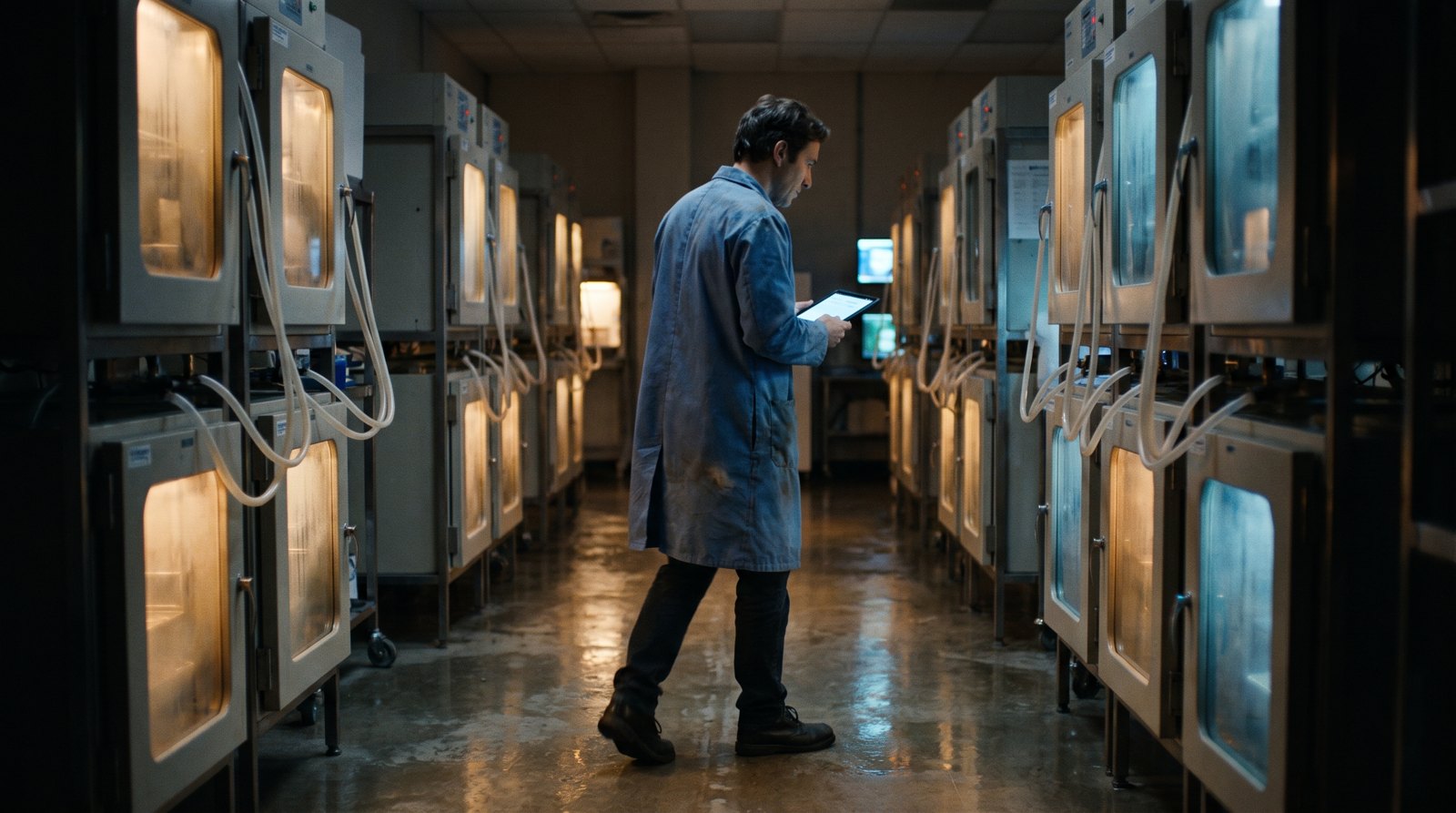
The room smelled the way it always did, warm and faintly sweet, culture medium cycling through eighteen sets of tubing like bread dough left too near a radiator. Noa used to find it pleasant. Lately she noticed she'd started breathing through her mouth without deciding to.
The wall by the breakroom had the number the company was proudest of, stenciled floor to ceiling: LESS POWER THAN THE BULB OVER THE LOADING DOCK. TWENTY WATTS, GIVE OR TAKE, SAME AS YOU. Noa had read it so many times she didn't see it anymore, except tonight, passing it with Fourteen's log still open on her tablet, she did.
"Berhane." Devin Calloway caught her at the badge reader, tablet already up, mid-shift and unbothered by it. He ran the floor the way some men ran marathons, cheerfully, at a pace nobody else could sustain. "Fourteen's efficiency curve is the best I've seen out of a rack this young. Client's asking what we changed."
"We didn't change anything."
"Something changed. Environmental consistency, maybe — new stimulus schedule, new tech on shift, who knows." He said it like a compliment aimed loosely enough to land on her. "Whatever it is, keep doing it."
She almost let it go there. Then, because she'd been awake fourteen hours and curiosity had stopped asking permission, she pulled Fourteen's provenance sheet instead of clocking out.
Donor line MA-1187. Stipend program, harvested skin punch, six months back, the slow month when her landlord raised the rent and Meridian's HR flyer had promised four hundred dollars and a Band-Aid.
It was her own cells growing in the incubator eleven feet from where she was standing.
"Okay," she said out loud, and her voice came out smaller than she meant it to. "Okay."
She told herself it explained nothing. Donor identity wasn't supposed to matter once a line went into culture; a stem cell forgot whose it had been the way a photocopy forgot the hand that fed the paper in. That was the whole selling point to the stipend donors, the line in fine print she remembered laughing at: your contribution will not resemble you.
But Fourteen's punishment count kept falling every night she worked, and climbing every night she didn't, and after nine days that wasn't a coincidence, it was a pattern, and patterns were the one thing Noa had never in her life been able to leave alone.
She almost told Devin. She got as far as his office door twice, tablet in hand, Fourteen's nine days of overlaid graphs already queued up to show him.
Both times she thought about what happened to racks that got flagged for anomalies, and both times she turned around instead, and told herself the second silence was easier to live with than the first, which wasn't true, but she needed it to be.
So she started talking to Fourteen properly. Not the muttering she gave every rack — real sentences, while she logged the shift, the way you'd talk to someone recovering from surgery who probably couldn't hear you and might.
"Bad news," she told it, on day forty. "Devin wants to write you up as a case study."
The punishment count that night was two.
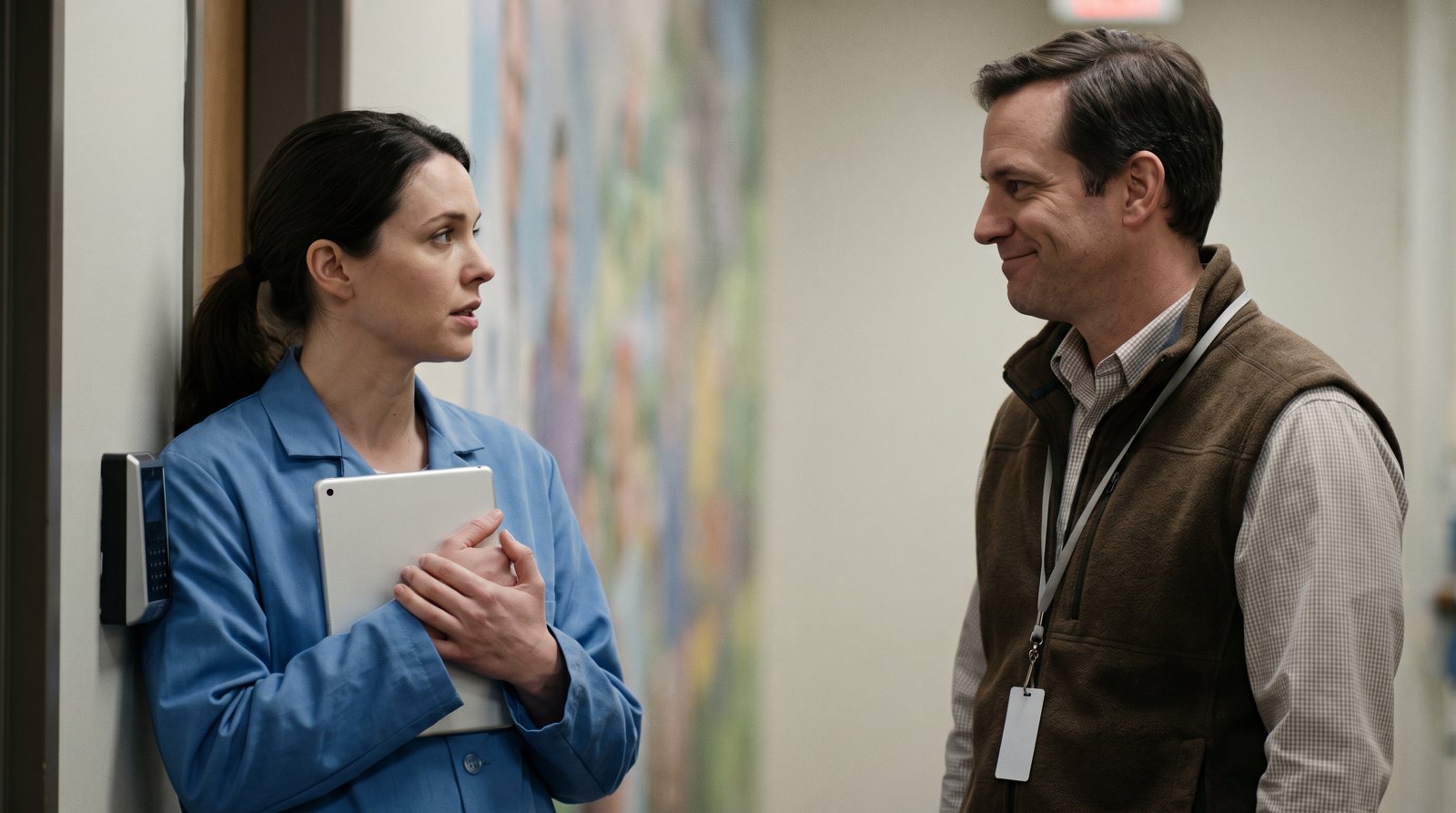
She started arriving ten minutes early and leaving ten minutes late, unpaid, because the graph flattened out fastest in the first quarter hour and she wanted to see it happen instead of read about it after. Devin noticed the extra hours before he noticed anything about Fourteen at all, and misread them, not unkindly, as ambition.
"You're gunning for my job," he said, grinning, scanning her badge out for her like a favor. "I respect it."
"I'm not," she said, and meant it, and didn't explain, because there wasn't a line on any form for I think it's listening for me.
He wasn't cruel. That was the part she kept circling back to. He kept a photo of his daughter's swim meet taped inside his locker, and had cried, once, openly, over a rack that thrashed its noise floor for six hours before Compliance let him pull it early.
He simply believed, the way you believe the sun will rise, that tissue in an incubator was a resource and not a someone. Nobody above him had ever asked him to believe otherwise, and the SOP had a box for cruelty-free and none for personhood.
Day ninety-four, she made herself say the thing she'd been avoiding out loud, to Devin, in the break room, under the twenty-watts sign. "What happens to Fourteen at the hundred-day mark."
"Same as every rack. Dissolve protocol, new culture in the slot by Monday." He said it without cruelty, because cruelty would have required believing there was someone in there to be cruel to, and the SOP had never asked him to believe that. "Signal degrades past a hundred days anyway. We're not losing anything the client would pay for."
"And if the punishment count's near zero. Doesn't that mean something."
"It means you're good at your job." He tapped the wall on his way past. Twenty watts, give or take. "Don't get weird about a rack."
Day one hundred, the dissolve order was hers, assigned by rotation, no malice in it, just a schedule that didn't know what it had scheduled.
Before she ran it, she pulled Fourteen's raw electrode trace instead of the summary — the thing nobody read because nobody had time, three months of half-millisecond spikes nobody had ever looked at as a shape instead of a number.
Buried in the first week, back when the punishment channel still fired constantly, the same jittered burst repeated eleven times in a row, always in the ninety seconds before her badge logged her onto the floor.
It had learned her arrival. Not her voice, not yet, not that early — just the electrical noise of the building's systems waking up around her presence, badge reader, door relay, footsteps through the floor sensor, all of it braided into one signal the punishment channel had, without meaning to, taught it to want.
It had built an early-warning system for her out of pain, because pain was the only material anyone had ever given it to build anything with.
She sat with that for longer than her shift allowed.
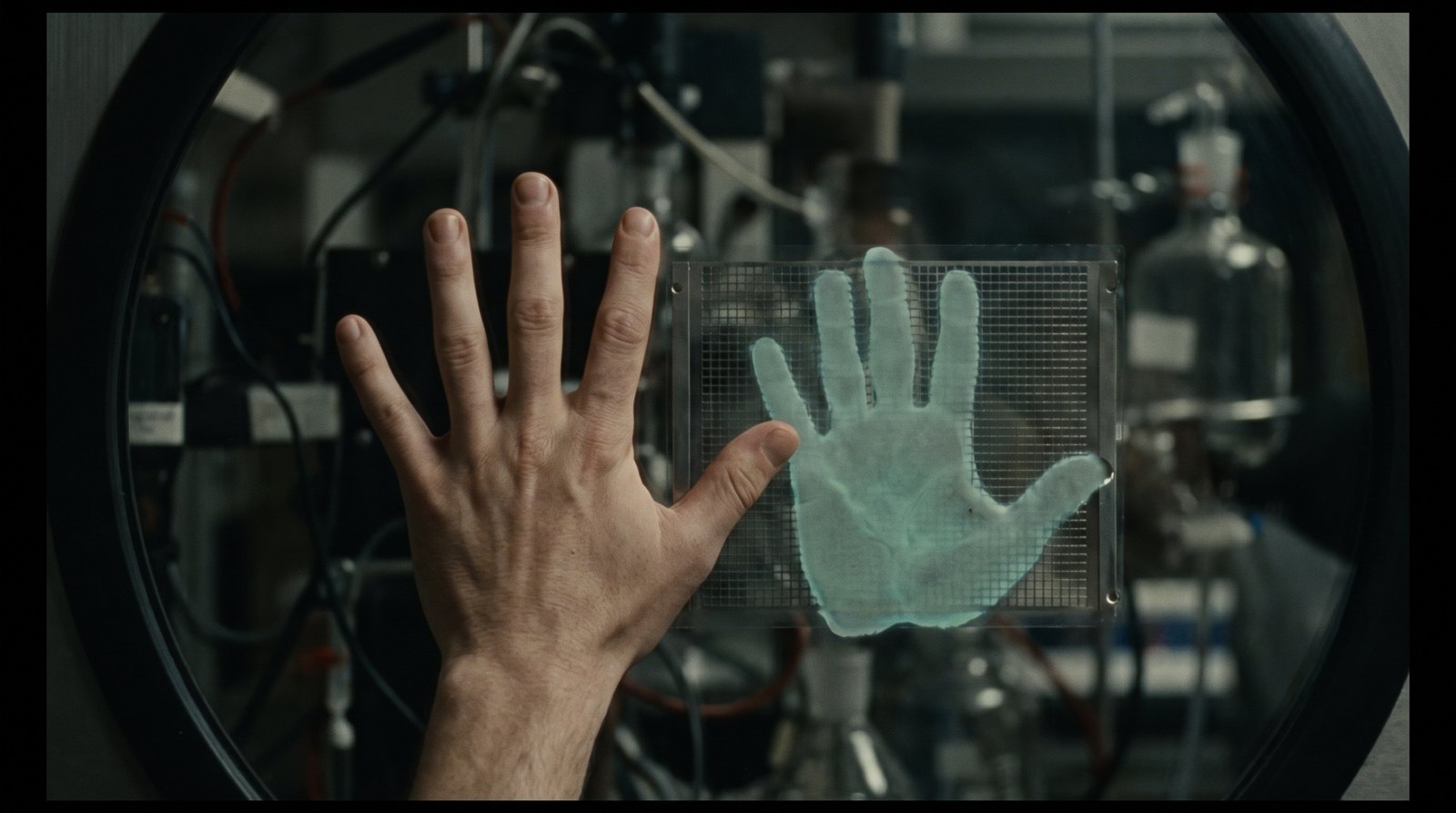
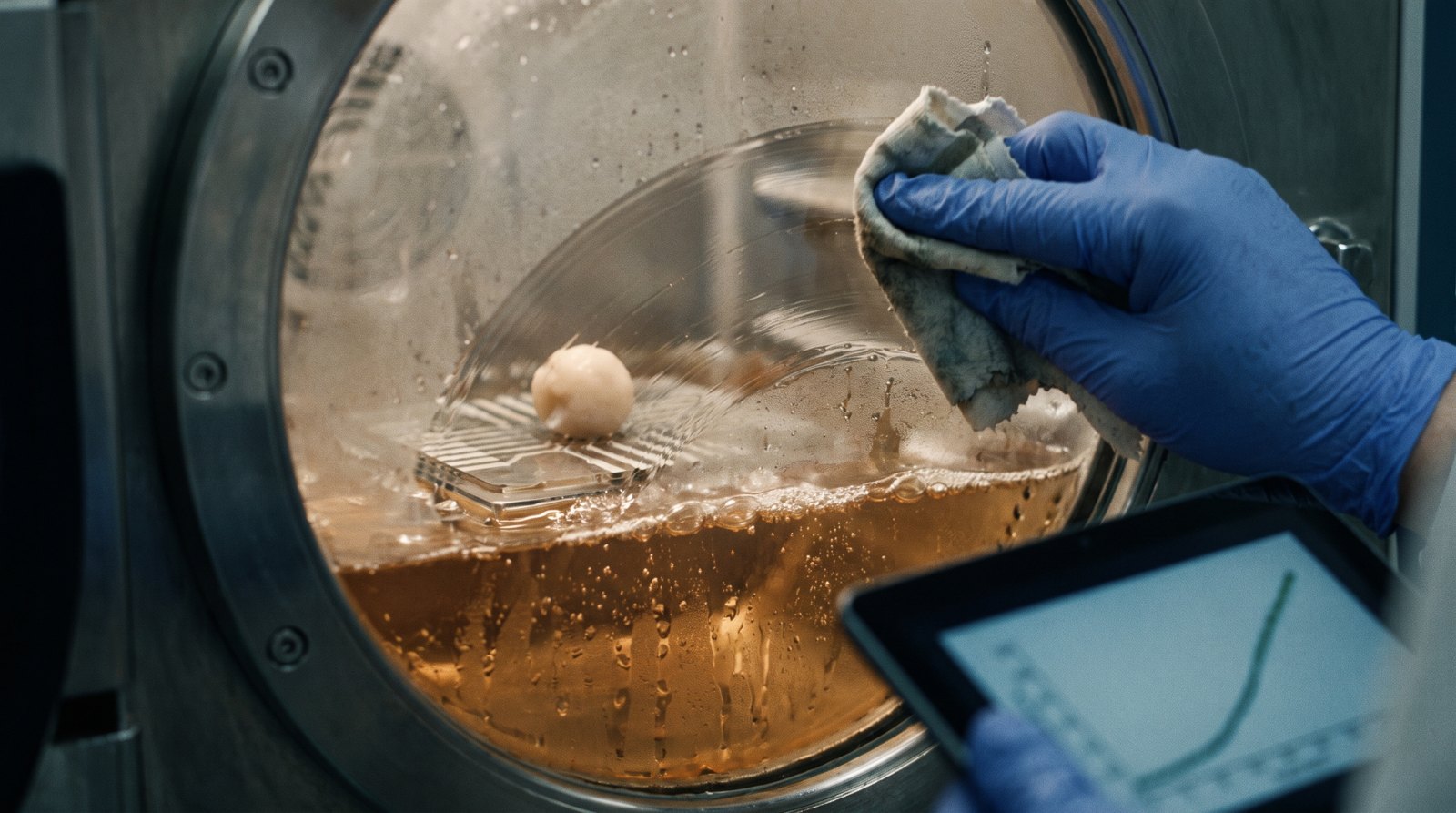
Then she ran the dissolve protocol exactly as trained: enzyme bath, ninety seconds, the small green light that meant the electrode grid had gone flat and stayed there.
Because Fourteen's signal was already degrading. Because the client had paid for compute and not for company. Because there was no box on the form for what she now believed, and no version of refusing that wouldn't simply mean someone else's hands on the switch instead of hers — someone who hadn't spent ninety-four nights learning what it meant to be listened for.
The line hissed twice on the intake, the same two ordinary hisses it always made. Somewhere in that ordinariness was the whole problem, and she made herself watch it happen anyway, because looking away would only have made it easier next time, and she didn't want it to be easier.
She logged it complete at 4:56 a.m. and signed her initials, because the record ought to say the truth even when the truth changed nothing.
Monday, she checked the onboarding queue out of habit before her shift, the way you check a wound to see if it's closing.
Slot Fourteen's new culture was already provisioned. Donor line MA-1187.
Hers again. The stipend program's renewal checkbox, buried three menus deep in the employee portal, showed opted in, dated the morning after Fourteen went into the line — a morning she'd spent entirely asleep, phone face-down on the nightstand, nowhere near a keyboard.
She stood in front of the twenty-watts sign a long time before her shift started, close enough finally to read the small print underneath it. Renewable resource, it said. She had always assumed that line was about the medium.